22 March 2011

Broken down Blantyre

Some themes are recurrent in Malawi and right now it’s a déjà vu of Ntcheu’s period of gloom. Except that it appears to be even worse, despite it being the ‘fast-moving’ city of Malawi. When we first landed here, we were staying at a friend’s house on the fringe of the posh quarters. Thus we were shielded from the bitter reality to which more ordinary Blantyre residents are accustomed. Now we’ve moved into an “average” neighbourhood, we’re finding out for ourselves what this entails. 3-4 times weekly water shortages (in the midst a very wet rainy season) and about the same frequency of power cuts (hydroelectric for most of it) appear to be the norm simply. It’s not that we’ve moved into a poor area or anything. That would be the townships strewn around the city. We’re still in a relatively affluent part of town, out of necessity (proximity to work and town for non-car owners, safety, peace), just not one of the posh parts. Of course we’re finding ways of getting around these (like writing blogs when power’s out, or having power naps). We’re just surprised by the differences in facilities that exist from one postcode to another. Of course the posher the area the less frequently these inconveniences arise. This is in exchange for higher utility bills per unit consumption apparently. But there are some other parts which are far from being posh where similar priviledges also exist. I’ve tried to grapple with that for a while now and I’m told it’s only because when you live in a less wealthy quarter, your area consumes less out of hardship/austerity and the ones who can afford the facilities can do so for longer before the area’s quota is eaten up. The alternative explanation has been one linked in a direction of inverse proportionality with the distance from a prominent politician/civil servant’s house. Another unfortunate feature that hasn’t changed much since Ntcheu, you might have guessed by now, is.. correct! The noise! Having had a 2 week honeymoon in Hanna’s house, albeit makeshift, we’ve now moved up on a hill, where it appears that every night the music from bars at least 1Km away get windswept up to our living room. And we can usually tell which direction the wind is blowing based on this alone! My ability to survive this for another year (not tested yet!) is entirely dependent on the quality of this noise. Whereas in Ntcheu the music tended to drift downwards, hence transmitting the bass beat mostly, here the windswept melodies tend to have a more ‘voice-like’ waveform. Not to imply that it is not distracting in its own rights, but just that little bit less. What doesn’t upset me in the least, on the other hand is the Muezzin from the nearby mosques, which is simply music to my ears...

So it’s been 6 weeks since we moved to Blantyre, and 4 weeks in our present house. The fact that I’m only updating this on here now is an indication of how hectic things have been since the move. This move alone was an epic, involving an intra-city move for all our loose luggage as well as a return trip to Ntcheu (3 hours each way) to pick up our furniture... all in the same day. But, with it, came a clearer definition of our respective roles at work. In stark contrast with Ntcheu where I was a bit of my own boss, setting up my routine of activities in order to meet my placement objectives, in an established unit like Queen’s, things are already in place and I kind of have to work my objectives around them. Despite this there is a lot of leeway and I have been able to integrate some of my extra VSO objectives in my schedule, very much centred on upgrading the standard of care in the districts. Apart from work, which is rapidly filling virtual blogs on a daily basis in my mind here, the other perks of moving to Blantyre have also started to become manifest. None of them are really about the upgrade of our standard of living to match the place, and indeed we have been trying as much as possible to uphold our Ntcheu tempo. Every visit to Ntcheu in fact is a massive perk from living in Blantyre, simply because it turns out it’s still not too far and the return visits abound with social interactions, where everyone I know there welcomes me back, as if I’ve been sorely missed for years. It’s a testimony to how positive a time I actually had over there, which I sometimes failed to acknowledge. But back to Blantyre, the exploration on foot and minibus of its various nooks and crannies have proved to be a real discovery. Perhaps more ground could have been covered by car, but that tends to then take you away from the city you live in. Feet, on the other hand (funny English twist- similar to left is the right way!), have opened up a meshwork of footpaths and shortcuts, with their vantage points and chance encounters, which I couldn’t have dreamt to discover from behind wheels. And smells too, but then these are balanced by an equally ubiquitous scattering of scents. With the rainy season animating this soil and atmosphere with an ant-like drone of natural activity, the results surround us in every way. Besides the incredibly lush vegetation and undergrowth that makes you feel like you’re in some kind of a hobbit-land at times, the temptation to respond to invitations from the close up world residing within is irresistible. The relentless buzz of insect life, bird life and funny-indescript-creature life that operate herein are all but fascinating. My personal chart topper happened last week, when we got drawn out of the house by what we thought was a horny cat announcing their readiness to mate atop the compound walls. To my utter joy and surprise, it turned out to be an amazing hornbill instead, perched on one of our trees.

In tune with this theme of green, another prominent perk of our last weeks has been the slow conversion of vegetable garden and flower patch to some new colours and flavours. Hardly a fortnight on and we can already see the buds creeping in from under their thatch bed. No fertilisers. “No nothing” as they say here! Except for some good old compost and those magic rays that irrigate it with energy when it’s not the rain quenching its thirst.

It’s becoming clear that the tone of my appreciation of Blantyre is evolving fast towards the positive end of the spectrum. This was predictable in truth. Anyone leaving a simple place where they had set home and worked hard to establish themselves, approaches a new, more developed place with a good dose of cynicism. There are certainly elements of it that maintain my cynicism, like the pretentiousness of some social groups and their casual disdain for the ‘simple folk’. Yet I’ve now fairly confidently established that these groups are thankfully a minority. The other hazards of the crowded city have also not gone unnoticed, like the crazy driving, especially from minibuses that goes on here. I almost got shoved in a water-logged ditch by a 4x4 that simply drove on the other day, but now I’ve learned that the simplest to avoid these unpleasant interactions is to just walk in a different way. Let the danger pass, avoid confrontation and then proceed! But this few-bad-seeds flavour is very soon overcome by the general sweetness of most people here. I’m really starting to see how this affable charm of Malawian people pervades across the whole land, spanning village and city alike.

This brings me to a concluding anecdote, which is Janet’s current favourite dullness-breaker. Having shunned the high spec techno bars for a quiet after-work week washer on Friday, I approached my colleague for him to take me to one of the local pubs. Now what I had in mind was itself quite a busy, happening place, frequently mostly by Malawians. But my friend thought that maybe a more traditional drinking place might be better. So we ended up in this small block by a market place, with a succession of tiny little pubs. The one we walked in was aptly called ‘the sitting room’. And it was exactly that! You have a line of 4-5 chairs on either side, such that you were always facing someone. Hence conversation flowed freely. The people were so welcoming and interested in us (not in a nosy way) that we overstayed our planned 1 hour by at least another 2. A few drinks and games of pool later, we decided to make our way back. As we pulled up the hill to my house, the vehicle suddenly puffed to a stop. Classic empty tank scenario! Quite interestingly, people tend to fill up by small amounts frequently here instead of getting a full tank once in a while- which given the unpredictability of fuel pumps is quite a sensible thing to do. So there we go, Janet and I are outside the house and our friend needs to get back somehow. Not the least upset, he sets off on what would be at least a 2 mile walk in that direction to fetch the gas. I stop him and call my usual taxi driver (Bekelesi) instead, who promises to be there within 5 mins. Sure enough a vehicle appears in that time, with 2 other people inside. I chant my appreciation out drunkenly to him “Ah Bekelesi, always so reliable!” and negotiate a price for the small fuel errand. Thankfully I got on to a bargaining exchange with him which delays proceedings slightly. By the time we’re finished and agreed on a price, hey lo! round the corner appears an identical vehicle with just the driver. Before I even have time to turn my head to find out who that might be, the first vehicle had vanished in a smoke. The real Bekelesi was here for us and Janet was writhing on the floor with laughter pains. My bemused friend quite relievedly invokes God for sparing him a nasty denouement of one of the best nights in Blantyre.

Lessons learnt: 1. Have a system for recognising your driver even in the dark. Lesson 2. Know his number plate by heart! Lesson 3. Make sure you have enough fuel when heading out at night!


In the House


Improvised outdoor cooking


Minibusing it


Hornbill in the garden


Limbe Market

28 February 2011

Tricycles and Wheelchairs Update 1

There we have it! It’s less than 2 months since the appeal for donations went up on here and already we have 2 tricycles doing good service around the streets of Ntcheu. Two people have had a life sentence of confinement and dependence removed thanks to this latest agent of empowerment. Their stories are remarkable and I give you a small close up of each one here. But before I do that, I should like to thank everyone at home for all their generous contributions. Without these, none of these patients would have had this unique chance to see their lives so suddenly imbued with hope again.

Case1: GC is a 60 year old man who grew up with a congenital condition causing all his limbs to be short and disproportionate. Over the years he developed contractures of both his legs, resulting in impaired mobility. How that deteriorated after he had the fall that led him to come into hospital under my care! He broke his femur and despite it healing in the end, his mobility and especially his confidence suffered a blow. His job as a goat seller at the market took a turn for the worse as a result and he himself came up to me to plead for help towards a mobility aid. Any difficulties I was having in selecting suitable candidates for the project were at once solved and I referred him to the rehabilitation technician of our hospital to be measured. I promptly delivered these to the office in Blantyre and within a month the tricycle was ready. I was already a Blantyre resident by then but I hadn’t lost all my links with Ntcheu. So I called the hospital transport manager to ask if there was any vehicle going from Blantyre to Ntcheu soon. By some stroke of fate, the same truck that delivered Janet and I into Blantyre with all our boxes, was back on another errand that same day. Since I had 2 tricycles to deliver together, again all my worries about uniting the patients with their long awaited tricycles were solved. A week later, I went to hand them over to GC (and BK, presented below). Not without some ceremony which is customary and expected with this kind of thing, the handover was done with the blessings of the DMO, DHO and administrator of Ntcheu DH. As GC wheeled off in his new transporter, you could sense that a whole new chapter had opened up in his life. One where he would regain some of that lost independence and resume remunerated work. Nothing more than that serene smile of gratitude on his face could convey it better...
Before
After
That Smile!
With DHO
With DMO

Case2: BK was a victim in so many ways. Born also with a slight abnormality affecting his physiognomy and leading to premature cataracts, he became the target of mockery and abuse from other people. Aged only 18, he was thus assaulted in Blantyre while I was still in Ntcheu and suffered panga knife cuts all over his lower limbs. These went through many of his tendons and nerves and healed very poorly. He was eventually referred over to his home district of Ntcheu from Blantyre to have rehabilitation. His legs had become almost completely dysfunctional by then, being complicated by infection and neurological deficits. With all his life ahead of him, consigning him to a fate of lifelong dependence and immobility seemed incredibly unfair. Thankfully his hands were spared. So, once the project got set up, I had no doubts who would be one of the first beneficiaries and I made sure I got all his contact details. He got measured in the same way as GC and had his bike made in the same batch. This was delivered to him 2 days after GC got his under the auspice of the entire orthopaedic department this time in the Ntcheu DH courtyard. His brother accompanied him and the new pride of being able to live a dignified life was the greatest gift of thanks anyone would want in return of this gift of mobility and independence to BK.
Before
After
With our amazing orthopaedic team

Check out the first donations on youtube to see the difference you can/have made to these patients’ lives:
http://www.youtube.com/watch?v=YOmHayuJbzk
http://www.youtube.com/watch?v=dfLLSDorkLo


About the project:
The bikes do take a little while to get used to. So the patients have to be reviewed by the rehab tech at first to make sure they are using it properly and safely. That is why the Ntcheu project works so well, as we have our own resident rehab tech there, Mr Mittawa. He has been extremely useful in getting the project set up and will remain as a link person there for future patient selection and work up. The bikes also will need some maintenance over their lifetime and they are made so that the cost of this repair is down to a minimum, using the same parts as the cheapest bikes around. If well maintained, they should last a good 20 years or more. The best thing about this project is that it employs Malawians to build the bikes locally and also supports the organisation which runs the workshops, called Malawi Against Physical Disability. This organisation is really transparent and has enormous potential to come to help to disabled people across the land. The only thing limiting them is lack of funds. By receiving more orders for their workshops, they are able to assist more disabled Malawians, who would otherwise just have to live with their disabilities. So far we have 2 tricycles. There are 2 more orders underway. And depending on how much more money I raise, we’ll have even more people being given this unique chance of some life changing improvement.

The mean machines!

Being shipped to home county- Ntcheu

Please keep your contributions coming. All you need to do is email me on ashtindoorgakant@yahoo.co.uk for details of my bank account (maybe paypal soon).

22 February 2011

Early days in Blantyre

3 years ago, when I left Blantyre after 3 weeks at CURE hospital to go back to London, I was overwhelmed by the great sense of human coldness and general sterility I experienced upon arrival. I was longing for more of that great human warmth and colourfulness characteristic of the Malawians I’d met in Blantyre. This, by all accounts, is mostly the same to date. But to get an idea of how much more so it must have been in Ntcheu, consider the fact that upon landing in Blantyre for the first time as one of its residents, as opposed to a mere passer-by, I felt almost as I did when I left Blantyre for London. I suddenly felt immersed in a big cold city full of superiority-complexed people, dodgy dealers, excessive security and smoke. Of course, all that is relative, since when compared to your Mayfair and Brixton quarters of London, Blantyre, despite all its superciliousness relative to Ntcheu, would still represent a saintly opposite! And of course, the initial feeling of antipathy towards it gradually softens as I start to discover that the city is nevertheless diverse and that I still have the choice to make my lifestyle not so different from what it was in Ntcheu. Every big city has this corruptive potential, some more than others, but ultimately, it only corrupts you as much as you are willing to let yourself be corrupted.

Blantyre cradles many extremes at once. On the one hand, you get a sea of anonymous Malawians, flocking to the city in search of any work they can find to get themselves out of poverty and be able to support their relatives back where they came from. These people walk everywhere, eat only the cheapest available food, sleep in the most basic settings, usually some distance outside the city itself and are essentially indistinguishable from the rural inhabitants. Interestingly, the phenomenon of urban drift does not appear to be anywhere near its counterparts of Asia, where there is a real congestion as a result. Townships around here are relatively small.

On the other hand, you find another group of people who are only ever known to walk when it involves moving from a 4x4 into a building, or back! They are made up of Malawi’s emerging upper middle/ upper class, the asian community of wealthy tradespeople and muzungus. At first I was surprised to find so many rich Malawians, but the more I thought about it the less surprised I became. If so much money is actually said to be injected into this country’s economy and the poverty level, essential services and infrastructure remain so stagnant (based on many old timers’ accounts I’ve heard and my own comparison between 2008 and now), the money must be going somewhere! This is not a generalisation, just a reflection of the surprisingly high number. These people live in exclusive areas in and around the city, guarded by electric fences and armed security. They frequent the numerous posh establishments around and shop in your high end supermarkets. They establish that stark contrast for which the city is famous.

In this dangerous juxtaposition of extremes, one finds another trait for which Blantyre is famous- crime, namely break-ins! Whether an extreme in scaremongering among the wealthy, desperate to safeguard that wealth, or a real extreme in the crime rate, I haven’t had a chance to establish yet and hope not to establish it by personal experience either. But its influence is ubiquitous. Enhanced security is everywhere ranging from broken glass embedded in the walls to electric barbed wire! Another peculiar manifestation of it that no one can fail to notice is the daily parade of armoured guards with angry barking dogs, which one security company likes to exhibit.

There is a middle ground though and it’s made up people who are neither rich nor poor, but are generally trying to get by. It is also fairly substantial which is reassuring. It includes salaried Malawians, students, and many lowly paid NGO workers (like VSO!) as well as members of the above –mentioned wealthy groups who decide not to behave like venerable super-humans. The middle ground, of course, sits uncomfortably between the rich, eager to lure them closer, and the poor, eager to humble them. Those who are in it by choice, probably abide to the latter category, whereas those who fought to get into it in the first place probably want to ascend further to get into the former category. Janet and I for one (two!), will probably try as much as possible to live the low impact life we’ve got accustomed to in Ntcheu, but still won’t alienate ourselves from a good bunch of people who might have opted for the more comfortable cosinesses of expat life. The factors determining lifestyle here are complex and there are plenty of good intentioned people living quite a plush existence.

Janet and my arrival in the big city has been accompanied by 2 crises incidentally, which are linked to the lifestyle choices referred to above. Firstly, one on a national scale, is the fuel crisis (Petrol/Diesel Palibe) which reached its dizzy heights just before we arrived. This had the strange ability, for once, of uniting the rich and less rich (and also poor, when you add in thirsty minibuses) under the same roof with the same desperation for a commodity. One might point out that the rich end of the spectrum were the more desperate, having grown so much more dependent on the stuff to ‘fuel’ their fancy lifestyle. Minibus passengers, if forced to, would probably be able to leg a few miles home if no transport was available. This crisis, apart from blurring the contrast between rich and poor, also throws some important questions about the state of this country. The effects of oil dependency can really be observed at close range and it certainly is worrying. As any ‘disaster’ it hits the poor first and hardest but knowing how the rest of the world is also so addicted to that liquid, one wonders what it might look like if suddenly in Europe or North America, people and industry and public services and trade suddenly got made to scrounge around for the last remaining drop of fuel in town for three weeks on end. This is what is happening at the moment here, and no one is spared. The queues outside fuel pumps are endless, the chaos bewildering- with everyone squeezing in best they can, straddling central reservations and even the opposite lane-, and the traffic unbearable. Janet and I, seeing this, are so glad we resisted the temptation to buy a car here. Beyond this relatively minor inconvenience, all services are also suffering. Supplies in the hospitals are at an all time low. Staff are being forced to adapt their timetables around fuel availability. Patient referrals from district to central hospitals for higher levels of care, are being paralysed, resulting in deaths at times. Meanwhile the 10-20 gas guzzler motorcades of certain individuals don’t seem to be suffering in the least!


We're actually in the wrong lane here and the 4x4 below is straddling back to the correct one. The line of cars is the fuel queue, not parked vehicles.

"FUEL PALIBE"- No Fuel!

The second crisis, one on a more personal level, is our pains with housing. This again has revealed some insights which forcefully tempered our precipitous attitude towards moving into a space of our own. Of course we wouldn’t have had the luxury to do that, were it not for the amazing hospitality of Hanna, fellow VSO volunteer, who literally welcomed us in like old friends. All this time, we believed that we would be moving in houses similar to some of our fellow expats, thinking without actually questioning it, that this was the norm. It’s only once we were told that we would receive a limited budget towards our accommodation, that we realised how exclusive these areas were. Yet there are many alternative options around, which are much less expensive. Sadly we don’t get many expats wanting to live there, opting for the posher areas where other expats live. It results in a strange segregation almost where expats have little chance of interacting with ordinary Malawians other than at work or their house employees. Our situation is unique in that we are the ones doing our house hunting instead of VSO placing us in a house (since my transfer to Blantyre halfway through my placement was a situation quite unfamiliar to them). Of course, I’ve wondered why the VSO houses have tended to be in the posher parts of town and the reason for it seems to be down to the fact the houses are actually provided by the college of medicine, which is a well-paying partner of VSO. So their employees (VSOs) are placed in their houses and VSO ends up paying, although ideally they should. In light of the difficulties in finding suitable accommodation for volunteers, and the constant pressure from the latter’s concern about security being inadequate elsewhere, the simplest (and sometimes cheaper) option for VSO has been to go with the posh houses. They try and cut the costs by encouraging people to share. Couples are given a special status (which is likely to change soon, with necessary budgetary tightening) whereby they are entitled to a house by themselves. Sadly none of those are available for us at the moment, not least helped by the fact that the ‘partner’ in my case is no rich college of medicine, but rather a poor relation called Queen Elizabeth Central Hospital! All this tedious delay however (2 weeks in a spare room with half opened boxes) has had a positive effect nonetheless. It has enabled us to understand the system better and make our quest for more suitable accommodation- within our means and in line with our desire to keep it simple and around ordinary Malawians. The light is finally starting to appear at the end of that tunnel we feel...

Of course it’s still very early days here and I will probably come back over my first impressions of this city. It feels so complex in its dynamics. Yet at times, things are also deceivingly so downright simple. Things will change and numerous new discoveries will be made for sure. After a year in Ntcheu, I don’t think I even scratched the surface. Blantyre is potentially more intricate. So I’ll keep my senses and observations acutely tuned to take in the most that one year can aspire to. But at face value, for now, to a new-comer this is what it has felt like. More to come.

7 February 2011

The sound of Ntcheu (Part2)

Today is the 7th of February. 1 year day for day since I’ve been in Malawi. Momentous date indeed. Especially since today also marks the day when I conclude my stint in Ntcheu to settle in the ‘Big City’ which is Blantyre. One thing you can be sure about is that I didn’t leave quietly! I left in true Ntcheu style. With a bang! A party that brought me in line very much with my earlier woes about the place. It will be clear after you read the preliminary notes that I wrote in advance about Ntcheu, how much I’ve grown accustomed to this one sensory stimulus.That’s what I imagined my leaving Ntcheu would sound like:

I won’t miss it. I’ll miss the place, the wonderful people, the amazing friendships, the good times, the fabulous countryside and so many things, let there be no doubt about that. But I won’t miss the sound of Ntcheu. Maybe I didn’t elaborate enough on that one!(?) But beyond the crazy fanfare of dog/hyaena howls, pounding rain drops on my tin roof and Uncle B’s sickening floor beat, Ntcheu was also the seat of unregulated noise in every context imaginable. And to my utter surprise, hardly anybody complained. Only the hardest hit (e.g. my friend who runs a guesthouse right behind Uncle B) saw the disturbance it was causing. Not a single person thought it might interfere with learning and concentration for example. And so, it went on. For some, it was a statement of status. The louder your speaker, the wealthier you are. The louder your shop’s music, the more attractive is your shop. It attracted more customers in that simple way. Thus, on our one mile long shopping street, you’d find no less than 20 nicely cranked up music systems, competing for who could blare out the loudest noise, hardly a few metres from each other. They invariably had a system inferior to the speakers (placed outside the shop by the way), which would magnify everything including background fuzz, to decibels that would wake a deaf man up! As this cacophony is taking place, one would be ill advised to stand right in front of a speaker, lest they end up with ringing ears for the rest of the week. Yet, to my bafflement, there is usually some guy happily sat on/next to/ in front of it, inflicting some irreversible damage to his eardrums. Occasionally you’ll find a dancer, inebriated far too early during the day, volunteering some of his moves for some attention.

Move away from this commercial noise, which essentially lasts only during shop opening hours, you get the night club feature which has no official finish time... at least not in practice. There is an interesting order to this disorder when you look deeper. The epicentre of chaos regularly changes location. My singling out Uncle B was highly misleading. I probably chose it for it funny sounding name and for the fact that it was my first presumed culprit. Then I found out that on any given night, there would tend to be one club that dominated the sound scene. And each time, it was the same speakers that would lie behind the chaos. This, I later discovered, was a set that got hired out in rotation, so only one club could have them on any given night. Whatever the mode of distribution though, the effects of it can be felt miles away. This is not helped by the town plan of Ntcheu- if such a concept can be applied. The bars that spew out this noise all face a valley where the hospital and most of its staff residences are located. I’m sure the wind also mostly blows in that direction! There are nights when it feels literally like someone is having a rave outside my room (Janet, queen of noise tolerance, will even confirm this for me!)

Then also is the one ultimate thing that no Malawian will raise their voice about- Religion. Of course, the sense of mutual tolerance of each other’s religion is highly amazing and commendable, but whether that justifies a church amplifying its sermons such that the entire town has to listen to it, I don’t know. This is what Ntcheu Catholic church is famous for. Much more prominent than the other churches, who also have powerful speakers indoors that can be heard till the end of whichever dirt path they lie on, this one boasts exceptionally powerful speakers (and members- whose money must have gone towards them) that sit right outside the church. Thus everyone in Ntcheu wakes up no later than 7am on a Sunday, to hear not only the singing but also the speeches and frenzied collections from this one church.
And the list goes on. Music really plays everywhere here and as loud as one’s system will allow. It plays outside our morning handovers in the hospital in the form of health education chants by some 50 shrill female voices. It plays in my orthopaedic office, even during consultations. It plays in theatre all the time. It plays on the wards from patients who do not need to check with others if it’s alright with them. It even plays next to the library. It plays in buses such that you could not possibly answer your phone with a chance of hearing what the caller had to say, assuming you heard it ring in the first place. It plays in almost every house, including mine (even though my ex-flatmate very soon minimised it). It plays in every shop and every bottlestore as I said. You can even hear it all the way up Ntcheu Telephone Mast mountain, coming from a particularly notorious “beer garden” at the foot!

One might think, especially knowing my historical aversion to noise, that this is somewhat exaggerate. But trust me, I have become a hell of a lot more tolerant to noise, and this time it really IS bad. The only way to disprove that is by experiencing it!


So that is how I thought I would be leaving Ntcheu. But Ntcheu has been my home for a year. Ntcheu has been the first African town to take me in as its resident- not just a tourist. Ntcheu has developed me in ways that couldn’t possibly have occurred anywhere else. Ntcheu has turned me into the doctor of my dreams, but beyond that also into a gardener, a bird spotter, a re-born footballer, a ‘famous’ pool player, a dancer, an explorer, a boundless foodie and so many other things. So whatever challenges it might have laid in my path, Ntcheu has become a part of me. And, in fact, more so for these very challenges. I’m so glad I had the chance to share that with Janet even if it was only for the couple of months which she spent mostly here, while awaiting confirmation of her lecturing post at the College of Medicine in Blantyre. The Ntcheu experience is so authentic it couldn’t be described merely in words even to someone who’d be living only a couple of hours away. Ntcheu is a landmark along the landscape of our lives, the freshest of them all. I really will miss it as a whole, with or without its music. The proof: today, as we were driving down in our removals van, I caught myself asking the driver why he didn’t have any music on. A few months ago, I would have been secretly praying as we got on that van that the CD player was broken!
Farewell Ntcheu. Blantyre ahoy...


My Beautiful Ntcheu dwelling


Party House getting ready!

Dj'ing is serious business here!

17 January 2011

Tricycles and wheelchairs

INVITATION TO WILLING SPONSORS

Dear friends and family,
I won’t pretend that this is not yet another fundraising initiative from me but I can assure you this time it has a different flavour. The difference is that there is no Oxfam nor even VSO attached to the end of it in a way that makes you wonder how your money has been spent. This time round, it’s going to fund my own work here, which you’ll see the direct results of, and whose player on the ground (me!) you already know and trust (I hope!).

So what is it I’m trying to milk you for? Well it is an idea that has taken about a year to come to fruition but which I see as one of the most concrete ways of improving livelihoods here. As you know, effectively Orthopaedics is more about saving livelihoods than about saving lives and with the challenges arising from limited resources, at times I wonder how much I can assist patients with my bare hands alone (and brains arguably). But with a tiny bit of investment, my input can really stretch a long way further. And that particularly investment is towards purchasing bicycle wheelchairs (tricycles) for people with both legs paralysed or amputated. Effectively, once they have been afflicted by the above conditions, they are often reduced to a fully dependent status. Unless they have a supportive family with the means to assist them, they can be truly marginalised with little means to sustain a living. Having a bicycle wheelchair empowers them almost like a new pair of legs might do. It gives them the means to mobilise further distances and engage in remunerated work (you often see them conducting small businesses around markets). Above all it also frees them from the confinement that comes with having no legs and resorting to using the heels of your palms to get about.

As I said, it took me about a year to suss out the logistics of having them made for the patients. In brief, there are only a few centres that build them as they need to be made to measure. They cost 400000Kwacha each, which is somewhere in the region of £160. It might seem like an expensive bicycle but it’s professionally made and is essentially an orthotic device which would cost at least 1 extra zero in the UK. So here’s my business plan. For any of you who have always been interested in assisting with development work but never trusted that their money would be put to good use, here is your chance. Any amount is welcome. What I’ll do is just give you my bank account details for the transfer. Then I’ll pool the money donated together and retrieve it here to purchase the bicycle. Any excess money will be used towards new patients, whom I’m always finding, or at providing badly needed wheelchairs for the hospital. I have 3 patients in mind to start with for now.

If you’re interested in this charity venture, please email me and I shall forward you my bank account details. Please spread the word to potential donors. I look forward to your assistance towards this project.

Yours thankfully (Zikomo Kwambiri)
Ashtin
ashtindoorgakant@yahoo.co.uk

Before


The Bicycle Wheelchair (tricycle)

After

12 January 2011

Clinical Digest11

One might not have got the real flavour of African medicine through my blog yet. That is because (grudgingly) most of that stuff belongs to the sphere of the general clinicians, more strikingly for the infectious diseases guys! That doesn’t mean that I haven’t seen these textbook conditions which I would never dream of seeing in the UK, like rabies (with its Oh so distinctive hydrophobic characteristic) or tetanus (with your pathognomonic risus sardonicus) or measles (Koplik spots- but then I had it myself in Mauritius!), not to mention the vast array of HIV related illnesses (Kaposi’s sarcoma, high pressure CSF of Crypto meningitis, PCP etc). But two cases in the last 2 months have certainly added the exotic flavour to my Orthopaedic caseload too. Not that I want in any way to rejoice about the suffering of the afflicted patients, but one can’t help but marvel at the science of medicine when manifested in such classic cases.

C4 transection
Granted you’re going to see that in the UK too. But most of the time, the patient will have been dashed off to an ICU unit and rigged up to countless tubes and machines far and safe from your regular ward SHO! As a result you (ie me, the SHO) have hardly had a chance to really observe the striking physiological effects of such an injury and the speed at which they progress. This is now the third case I’ve seen already here. It’s quite common in fact, owing to a certain hazard called the “Matola”. This is the open back pick-up truck I’ve referred to already, in which people cram in the back, most sitting on the edge holding on to hardly anything. That combined with the terrains for which these vehicles are reserved (far flung village rocky dirt roads where there is no road access for better vehicles) is a recipe for disaster. After a sudden bump, the patients tend to be jolted right up in the air, often landing on their heads. Those who make it alive rarely present without a crack somewhere. When the break is in the cervical spine and involving the cord, one is left to praying for the best. What with the lackadaisical approach to ATLS and C-spine immobilisation prevailing in this place! The pattern of this neurology is so fascinatingly typical though that it could easily be the equivalent of an anatomy textbook condensed in one clinical presentation. You can map out the level of transaction to the exact dermatome. In this last case you could do so even without laying hands on him. A simple eyeball would tell you that his thoracic respiratory muscles had been knocked out of action. He was reduced to diaphragmatic breathing, of which unfortunately he would very soon tire. Sadly there are no remedies to this diagnosis here. You just hope that some neurology, at least the respiratory control, will return. Any attempt at transferring the patient acutely often only means changing the place of death and, more worryingly, adding to the patient’s distress through cumbersome ambulance journeys. Even if you happen to come off your matola right next door to the spinal orthopaedic hub of QECH in Blantyre, and for that matter in Europe, your chances of survival are still pretty slim. The only difference is that in Malawi, the rapid decline is for all to see, with ITU reserved for only the few cases with a theoretically better chance of survival. Recognising this early is really a knack the tropical doctor must needs master.

Congenital Hypophosphatasia
I admit it. I never even heard of it before coming here. That’s because this condition belongs to the weird and wonderful repertoire of metabolic bone diseases, that, unless you’re running up to an exam or the like, you would never willingly inflict upon your brain. To be more precise, the condition can be specifically attributed to the group of Vitamin D resistance syndromes. Wow! Completely unprepared for it, I got called one morning to review this 1year boy with a bizarre clinical presentation and even ‘bizarre-r’ looking Xray! The difficulty here is that everyone is somewhat expecting this “muzungu orthopaedic specialist” to come up with a spot diagnosis as he must have read about it before! But there I was as perplexed as them if not more. The child had a classic presentation of long bone fractures with minimal trauma and generally didn’t like being handled. The Xrays, I found out as I revealed them to the superior beings that inhabit CURE hospital, was quasi-diagnostic of the condition. It is so rare in fact most of you (medical readers) will never encounter one in your lives. Even google images failed to conjure up any decent pics for comparison. Once again, the treatment for this kind of condition is extremely limited here. Even at Queen’s Hospital (QECH) where the child got referred, the prospect of lifelong phosphate/Vit D replacement is extremely challenging without a family who can assist financially. The usual outcome unfortunately is a gradual decline into terminal renal failure.

So here again, I end up ending on a hopeless note regarding my patient’s outcome. However, in perspective, most conditions we see are common and treatable. We, as medics, have a natural tendency to get excited about rare conditions... I guess to counter the boredom that might arise from applying your 1000th plaster for a wrist fractured in exactly the same way. What can be frustrating is when even the simple stuff gets mismanaged. The danger then is to identify one single person/factor in the entire system to blame. But when the system is fraught with such severe deficiencies of staff and resources, one might instead remember all the cases that are actually being well treated by that person/factor and work on improving the system rather. From that premise however arises the conundrum that some staff feel completely exempt from blame as a result and take liberties with patients’ health. Who and how do you blame? Or should you blame? If you don’t (something or someone), how do you identify the fault? That really is the challenge that working here as a volunteer doc exposes you to. More than the pathology and surgery of medicine, you’re learning things far beyond these borders. And by one year, I can say that is also quite a rewarding experience.

New Horizons

...Phew! Almost a month since last blog. I guess that tells another story in its own rights- my internet connection here!


Reflections on an old year
It feels almost surreal to think about it. The recent year switch actually symbolised close to a full year of my placement here. 11 months by the time this blog will be up. It moves me to tears almost. So intense. So fascinating. So real... It has transformed me in the deepest of ways and this has surely not been without the mistakes and challenges which forced that learning curve very much down the hard way! I’m confident that I’m coming out at the other end of this chronological divide stronger, cooler and wiser in my humanitarian vision.

So what has this journey, which is yet to be half completed, consisted of? Allow me this nostalgic retrospective exercise for symbolism’s sake. February 2010, the 7th, the day it all started. A mind boggling crash course into this country’s diverse facets before being thrust down the deep end for a taste of the real thing. To be honest, my dive was somewhat cushioned by a month of central hospital “settling in”. The immersion into Ntcheu’s myriad sensations felt none the less absolutely dazzling! There was the initial period of unlimited enthusiasm at changing everything in the hospital, soon tempered to the confines of the orthopaedic department. That itself gradually got further refined and narrowed in its scope. In May, Janet paid her first visit after 3months of sage separation and we celebrated in style by hitting on one the best road trips in my life, going up north through the highlands to Nyika plateau and cruising back along the lakeshore road. By June, things had started flowing a bit smoother, with connections being made within Ntcheu and wider into the cities, where senior Orthopaedic support is known to dwell. I was finding my depth and could now let my hair down a bit (that amazing amount that rests atop my head!). Fortune obviously had it that the world cup was happening at that very time. The first one ever to be hosted on African soil and one to which I actually had tickets (thanks Su)! And what a trip that was too- 30+ hours each way aboard a cochlea-challenging bus through Mozambique and Zimbabwe. Jo’burg then Cape Town followed in the full frenzy of possibly the most electric of all sports gatherings to exist. Truly, truly a landmark of my African escapade, not to mention my entire life! The work in Ntcheu then resumed with the same momentum it had before the interruption. I was collecting data for the Malawi Ortho Assoc’s AGM. This was given a special boost by the visit of the super-ortho-doc Steve Mannion and his team Feet First, who visited Ntcheu and whom I later joined on a full-on surgical week in Rumphi. My insight into the Malawi health care was also deepening as a result and I already had my sights on VSO’s next doctors’ peer support (for which Klaas and I had been designated as main organisers at the last one in May, courtesy of Marieke). Just before the AGM came another biggie, which somehow never got its due spectacle on this blog, partly out of a desire to preserve its full independent sanctity, and partly because it would have eaten up at least 10 blogs’ worth, which was impossible with the AGM around the corner. I’m talking of the Mauritian instalment of Janet and my wedding in August. Back in Malawi things picked up extremely fast with the AGM first and the VSO national conference/doctors’ peer support next. I found myself very involved at the AGM in September, presenting two papers while also helping with coordination of the whole event. The short lapse before the national conference saw the amazing Lake of Stars music festival and a brilliant leaving party that surely put Ntcheu on the map and on the musical repertoire of a sizeable bunch of VSOs (look up the Ntcheu song in the slam section for clarifications- the tune is that of Alicia’s Empire State of the Mind!). An intense build up to the national conference and peer support it certainly was, with meetings and phone calls and internet sessions happening at an unprecedented rate. All that while work was also proceeding at full steam, putting into practice all the newly gained wisdom from our orthopaedic meeting. My stress level, not in the least helped by the escalation of loud music from Ntcheu’s nightclubs to honour the summer peak in alcohol consumption, at that time distracted me from my intended mission in some ways and I found myself back pedalling very quickly. A perfectly timed retreat into the heart of Malawian culture helped to readjust my system. This was the most intimate contact I’d made thus far with the real Malawian folk as I spent a week sleeping in a hut on a reed mat and eating the local food daily in Gongonya village. All this while having my evenings cradled amidst quiet starlit reveries under limitless clear skies. Back on track, my mind was now set on the next major transition in my Malawi experience- that of welcoming aboard that so-far solitary journey of mine a new person- Janet. What a reunion it was! It’s been so marvellous and intense at the same time that I cannot find words to express it in this blog. Not without its challenges as expected, this new journey of two has been rightly set to the tune of an exciting year and a bit ahead. All the excitement of Christmas and New Year was somewhat consumed in the mutual “settling in”- Janet’s first and my second. And here we are in the new year with new hopes, new insights and new ambitions for this kaleidoscope of experiences that be the Malawian reality...

What better way to confirm that we are indeed in a new year than with this latest spate of joint madness! We were busy chopping up a panful of basil leaves freshly harvested from our bountiful kitchen garden and garlic to make our own pesto (which costs an arm and a leg here) when hey lo! from nowhere appears a drunken bat, executing the most bizarre pitches and yaws. The microbiologist in me and the one next to me took less than a second to figure out the threat that dwelled aloft. No-one forgets rabies when they’ve seen a case of it and no-one knowing that would take the slightest risk when faced with a potential threat of it. But then the question arose- how do you tackle a potentially rabid bat darting at full speed in your living room with all escape routes securely closed? Next thing Janet (still in the kitchen) sees, after we isolate the bat in the living room, is me emerging from our room covered from head to toe in heavy duty water proofs, save for my face. I’m on a mission to set the bat free with the minimum fuss. But my face feels vulnerable, exposed in the face of this challenge. Suddenly Thandizo, my guard, [who cavalierly offered to readily pounce on the flying mammal to put it (and us) out of our miseries but then revised his proposition seeing me in my new garb], points out us that there in my living room resided a crash helmet left by my recent flatmate. The rest is a scene that could well have come out of a spoof of the X-files: this helmeted strangely attired alien with a huge flattened cardboard box in his hand engaged in a frantic mission to ground an enemy a hundredth his size!! This he finally does after ten or so attempts and, in a final act of elation, concludes the mission with a firm sweep to the concussed victim which sends it flying onto the outside. And that is how we are marking the first days of this exciting year. We promise to bring many more of those to you... Just give us time. Happy New Year everyone and thanks for your enduring support.

Ntcheu Market

Handy juxtaposition of services!!!

X-files...

13 December 2010

Clinical Digest10

I realise I haven’t managed to enter details of my clinical work for quite a while on here. That was not purely out of fear of alienating my non-medical audience (as I’m told the medical jargon does interest the wider public too- hence the popularity of medical sitcoms!), but also due to the intensity of my life at and outside work recently. Hence I’ve been saving up the stories to deliver them in one package...

Man off the street
This case provided so many windows into the realities of working in the Malawian health care setting that I wish I had encountered it earlier and set the picture for you much right then on that subject. The man was a 60 odd year old who had been on our wards for some time under the general clinicians with some poorly healing leg wounds. Unfortunately he also suffers from an undiagnosed psychiatric illness. As a result he has also been abandoned by his family and community and ended up in the hospital without a guardian. This usually is a non-starter here. The patient has no one to assist him with self-care as the staff manning the ward are usually too busy to add that job to their list. Hence these patients invariably suffer from some form of neglect. As it is this man, quite reasonably I believe, decided that nothing was being done for him at the hospital and took his own discharge. Having nowhere to go and with severely impaired mobility, he ended up abandoned near the main road around the hospital. Apparently he’d lay there for about a month before he first came to my attention. It was a Friday night and I was heading out for a drink when I saw this man with horrible looking dressings around both his feet, full of mud and completely tattered leaving the inside partly exposed. His wounds were so bad his leg bones were actually visible. That is bad news in any orthopaedic book I know! Thus I decided to get him into hospital and work him up for a debridement at least until we can stabilise him for bilateral above knee amputations, which is the only thing that could save his life. That’s when the whole can of worms opened up. Firstly there was no one willing to carry him 100 yards to the hospital on the streets, because let’s face it, no one wants to assist a mad man like that here! I eventually paid some guys to take him in. Once in the hospital more obstacles would crop up. The admitting clinician for one did not feel like handling him alone and in the end I had to assist her with the initial clean up and change of dressing until 8pm. That was a gut-tester in its own rights and revealed an important fact to me- that maggots residing in his bandages had potentially saved his life! I don’t know how beneficial the other bugs in there would have been though. Having somewhat cleaned him, I starved him for the next day thinking someone would echo my thoughts that this guy needs an operation urgently. To my surprise that was far from being the case. Having decided to come in on a Saturday just for that, I had to first face up to a spate of pathetic mockery, where this naive muzungu had believed he could save this man’s life who deserved to die just because he’s mad and does not have a guardian!! When I refused to laugh, it became clear I wanted an anaesthetist to work this man up (He was not a diabetic and had normal bloods- hence confirming that the state his legs were in was in large part due to neglect). Further neglect would claim his life and I was not prepared to allow for that. Thereafter it was a whole barrage of excuses that simply got laid in front of me so we can’t go ahead with the operation. Ranging from medico-legal concerns about consent through social issues about his post-op care (which I had thought about and addressed by planning to refer him to our mental hospital post op and then organising a wheelchair for him) to the non-availability of suxamethionium in our anaesthetic department (it’s like having no blades in a surgical department or no plaster in the orthopaedic department- which, sadly, is also known to happen up here!), the reasons kept piling up. In truth, the main reason was that no one was interested in this mad man (me or the patient?!). So, having concluded that it might be weeks if not months before anyone decides to assist me with this patient, who will inevitably conclude once more that there is no point in him staying in hospital, I referred him to Blantyre for some more specialised people to handle his care. It turns out then that just on the day that the defaulting anaesthetist from Ntcheu rethought his position on this case and congratulated me for rescuing the poor man before the rainy season (which would have wiped him out like a fly), I visited the ward he ended up in Blantyre... only to find that the resistance to assist a guardian-less psychiatric patient was no different there than it is in Ntcheu. The legs were back to almost their original state of decay with little care being administered to him and the plan was just to send him back to Ntcheu without the amputations. For what may I ask if not to die a peaceful death?! I’m afraid not while I’m there.

Amputations
Speaking of amputations, I’ve also dealt with a small series here which have very much enlightened my practice. We’re talking of low-resource settings here and everything you do has to be adapted to this. So when you do your bone cut in a below knee amputation, you have to make sure you have enough Giggli wires to get you through it all. Because if you don’t, for example because the wires have snapped (common problem), then you don’t have an electric saw to finish it off. And this is what happened in my first case. The bone was rock solid and my only tool left after my 3 Giggli wires succumbed to heat exhaustion was a blunt osteotome! So I ended up doing a closure under tension and hoped for the best. Close monitoring allowed me to anticipate a breakdown of his wound, and I took him for a revision before that happened. Thankfully the case was salvaged. So on my next case, I had extra wires and very sharp osteotomes on board and proceeded without much difficulty. Then I also learned that by holding the wires straighter (with upward pull) rather than in an acute curve around the bone, the heat generated was less and the wires didn’t break. Having an assistant pouring cold water slowly on it also helped. As for the osteotomes, they helped in dealing with the fibula issue, which I always used to cut in one stage proximally, with the inherent danger of disturbing the neurovascular bundle in that fairly blind method. What of course turned out to be better was to do a safer osteotomy distally, take the leg off (sorry for that graphic wording but that is exactly what it is!) and then shorten the fibula in a second stage. It’s a bit unfortunate that I’m refining my practice in this way, since any hope of supervision in a district setting is unrealistic. Some people would argue that these patients should be left alone instead, but the outcome of that would be near-certain death from spreading sepsis as the central hospitals could not cope with such referrals if all districts were to send every amputation to them. In most cases also they are straightforward and uncomplicated and the recent series only illustrates some difficulties that sometimes arise. Just in the same way as most Caesarian sections are dead easy, until the massively bleeding one comes along and everybody then gets agitated and starts asking why we’re not sending them all to a central hospital to be dealt with. The answer is that, in practice, and with our resources, this is simply not possible and some complications have to be accepted to be able to continue to provide for the wider majority of cases that go without (this is called the theory of innocent shields of threat in philosophical bioethics parlance).
I did one final amputation in that time which will add to my bad series and again I don’t think this reflects on the general quality of amputations at the district setting. It does however highlight one management misjudgement of mine, which was not to be aggressive enough from the start. My patient was a forty year old diabetic man with a gangrenous septic little toe. His leg however was more severely infected as evidence by his Xrays which showed osteomyelitic changes as proximal as his midfoot. For some reason (partly mixed with influence from other clinicians), I opted for a ray amputation and loads of antibiotics to try and save his leg. That proved to be the wrong choice as he immediately developed a wound infection. I then thought that I wouldn’t wait any time and bring the amputation level proximal and do a Syme’s for him. That again was not proximal enough and unfortunately, he ended up developing gas gangrene (classic soft tissue crepitations). This time, I put my gloves down and decided to refer him straight away to the central hospital for a higher level amputation and better diabetic control (since all we had left was out of date Glibenclamide). I found out later he had an above knee amputation, which was healing well. Strangely, some 10 days post op, he went into a diabetic coma and succumbed to that. I can’t help wondering whether that could have been helped by an earlier referral.

The rest of my surgical work has been a mix of skin grafting, soft tissue work and even an open reduction internal fixation. The skin graft was for a long standing burn wound which was not healing with simple wound care on the ward and which I was referred late. I did a combination of split skin and morsellised skin grafts (similar to pinch grafting in principle but with the donor site further from the wound, where an elliptical full-thickness skin is excised, defatted and chopped in morsels which are then just laid on the recipient site). The main advantage is the donor site which heals much quicker than the split skin (which also with poor equipment can end up much thicker than intended). The soft tissue case was a polysyndactily of the 5th toe, where the importance of careful surgical planning was demonstrated at its best. I was lucky to do this with my clinical officer colleague who could hopefully retain this as a learning point. We identified the dominant toe and all its components that needed excising from a pre-op Xray, which I insisted on having in theatre (often it’s left on the ward). The incision was a S-shaped flap which closed beautifully. The final case, the ORIF, was a tension band wiring for a shattered patella. With no Xrays and a single K-wire which had to be cut and used twice, we ended up cutting through one side of the patella- but by protecting the leg in a backslab post op, and advising protected weight bearing, we managed to maintain the reduction and restore his extensor mechanism.

I feel that I may not be operating as much as I would initially have liked to in Ntcheu. However, with the extent of ward clinical as well as organisational work I am involved in, which arguably is much more important that operating in a district setting, I am quite happy with the extent of this surgical work and its coverage. Every new case provides a learning opportunity to me in this unsupervised setting and by applying my own safety criteria stringently to each case on its own merits, I have the reassurance that I am not going beyond my capabilities.

22 November 2010

A week less ordinary

5 days and 5 nights in Gongonya village (T/A Kwataine)
I’ve toyed with the idea of “sleeping rough” during my placement here in Malawi since I’ve arrived really. I thought that would be one way of getting closer to the traditional way of life of the people I meet everyday in the hospital and also to better understand some dynamics. For the first few months, I couldn’t even entertain the idea with the rainy season still in full force. After that, I got myself into a routine of work and travelling/meeting people, essential for my early integration, which left me with hardly any time for such ventures. Knowing that the national conference would be a real climax in my agenda here, I finally thought that if I don’t do it in the anticlimax period, before the rainy season reappears and more importantly before Janet arrives, then I might never get to do it. So I hit the iron!

The experience was a unique self-styled escape into a world far removed from the conventional tourist or expat worker trail of Malawi. My expectations were mostly based on 2 previous cultural village visits, but even those were heavily geared at tourists with plenty of extras. This time round, I would taste the real thing- or as close to it as I may ever get. Thanks to Patrick, a great friend at work who works as a HSA (health surveillance assistant) at Madzanje village, I got my keep organised there. Patrick, in that genuine self-offering way typical of most Malawians, decided to join me on my mission and shunned his own comfy bed in town for this. The adventure was partly what lured him but also the opportunity to develop our friendship. Malawians, I have found, will really go to great lengths for this.

The plan was to commute to and back from work in the way the villagers themselves do. That meant mostly matola rides in the evenings, whereas in the mornings, it was essentially a chance affair. Since the time we set off was the peak time, all public transport was too full to stop. We’d end up hitching lifts or trying our luck with any vehicle with a spare seat (for which they charge). It seems that my muzungu status helped at least one tiny beat, not in getting me a lift from the passing cars, but in getting a big bus to stop on two occasions at this roadside lay-by which they normally give a wide berth to, leaving such petty duties for the minibuses. From the main road to our village, we would cover another 2.5Km on foot- a perfect daily constitutional as it were. The first time to the village and the time when leaving didn’t feel quite like this though, more like a full work-out rather, since I had my full week’s luggage with me as well. True to my villager emulation, I ended up carrying it on my head, and indeed that proved to be the most efficient way of going about it. Also one day, Patrick and I cheated, partly for the fun of it, since Henry, my flatmate, offered to lend us his motorbike. Given Patrick’s gregarious elation at this mode of transport, I discreetly declined a repeat offer the next day. The transport experience alone was enough to paint a picture for me of what difficulties the local villager might experience getting to the district hospital when ill. Madzanje, from which it takes a maximum of 3hours to get to the hospital, should really be considered nearby, when you consider such places as Kasinje, which are up to a 100Km away.
Nelly & Agogo- my super hosts

Let me now describe the actual village. I should point out first that I began by telling a few people at work where I was going on Monday, since they were all intrigued why I was carrying a travel bag to work. After noting their puzzled, somewhat disgusted, reactions at being told that I was going to swap my own comfortable house for such basic conditions, I decided not advertise it anymore. When one has to work so hard to get away from such an existence, it becomes quite understandable why they would never do such a thing voluntarily. But I really wanted to experience this way of living at least once properly. And in fact it’s not as bad as it’s made out to be. My hut was essentially a mud brick two-bedder with a thatched roof (very leaky, which is why I chose to do this before the rainy season) and my room a furniture-less rectangle with a concave mud floor on which rested my mat. The only challenge was hanging my mozzie net from was the roof beam and I reached it by way of saccadic jumps while stretched spread eagle against the wall. My rock climbing skills have come in handy like that a few times already! Once you’re used to lying on a hard surface, you just don’t think about it. After all some 80-90% of all Malawians do it. The only difficulty is lying sideways as the bony prominences of your pelvis do get sore after a while. But the thing about back pain, well I don’t know if it’s true! The concavity of the floor (from erosion) made sure I lay in the same spot every night! Patrick, who initially shared the same room, had to relocate in the other room (our dining area) the next night. The concave floor simply meant we would be converging to one same spot on the floor- a bit too close for comfort if you ask me...
Mat & Net!

The other proclaimed deterrent for staying in a village proved also not to be a big issue for me- the food. Essentially I had Nsima every night, with a green vegetable dish (sometimes cooked with a delicious groundnut sauce) and a tomato-based relish (lerish here!). On the first 3 nights, the latter would comprise dried local fish, with eyes still on, as its main ingredient. I have to admit that it took quite some hesitation before my taking the plunge, but once I did it turned out to be quite tasty. I reckon that as zungus, we tend to be put off from these foods purely from the sight and smell of them in the markets, looking quite untidy, with flies around. But that doesn’t mean it’s not cleaned properly before cooking. In fact it’s partly boiled and that softens the meat and gets rid of the smell. The last 2 nights were nonetheless somewhat easier for my own diet, with beans being brought in to replace the fish. The most memorable part of that food experience had to be the freshness of it all. Almost all of it was made from local ingredients (except for the fish) either cultivated the same day or dried and preserved beforehand. It has unwittingly turned me into a real Malawian food fan.
Patrick about to eat all my dinner

Regarding, hmmm, the more basic facilities, I have to say that the absence of a toilet with a septic tank was not an inconvenience I even noticed. Considering the amount of hassle I have with keeping the one I have at home working properly, with frequent water shortages, a defective flush mechanism and leakages, this hole in the ground was clean, not overly smelly and piece of cake to maintain! As for washing, again since I’m so used to having bucket showers by now, I even underwent an upgrade from my routine by staying there. My hosts were so obliging they made sure I had hot water in the mornings to wash. When you’re out in the crisp morning air, before the day heats up, few things come close to those 5minutes of bliss behind a reed enclosure splashing tepid water over your body! The day ahead seemed like the least of details to tackle.

The rest of my agenda in the village was made up of a number of encounters to allow me to peer closer into the village way of life. Among other things, I discovered the morning beer call of sowing/harvest time, the Nsima chain, the village headman’s quarters and, more impressively, the Traditional Authority for the entire region! Right now is the rainy season preamble, where all the farmers are frantically preparing their lands for the big downpour, so they can get the best harvest in a few months. This is a survival necessity in this part of the world- to the point that I have even had to discharge patients well before they were ready to go home because they and their guardians could not afford to desert their land, their food basket. With this routine comes the inevitable need for distraction in the evenings. Hence the morning beer call. Since there are no designated pubs as such here, different houses take turns in providing the evening refreshment, namely a home brew called “Masese”- not very different from Chibuku I would guess. I was not allowed to go and check by Patrick, who insisted he had my best interest at heart! The one big difference with drinking in town there was the fact that more than half of the participants were in fact women. Obviously since they are the ones who’ve toiled the hardest all day clearing these fields! I especially keep this heart-warming image of two giggling 50-odd-year-old women stumbling past my hut one night singing Waka Waka without a care in the world. Exhausted. Happy. That strangely reminded me of my own university days with my buddies after a weekend session!

I think I must have seen every part of the Nsima chain and as I understand it, it goes like this: Maize harvest, drying of corn cobs, plucking of kernels, soaking of kernels in water in big vats, drying out of the soaked kernels on mats, grinding (either by laborious pounding in a mortar or if one can afford it, at one the numerous maize meals scattered across the village) and a final round of drying again. If one only recognised the labour that went into making every single scoop of that most Malawian of all dishes, I think one might appreciate it a bit more!
As for the village headman, I actually met him on the night the drunken women lilted past my house. He had not been spared a similar fate, having been at it most day too. He was in a most jovial mood when meeting me, which I found incredibly welcoming. He even appeared to be the more grateful out of us two and he was effectively my host! Oh Malawi, what a warm heart you have! The traditional hierarchy of authority in Malawi and many other African countries, I believe, starts from small units, which coalesce gradually until one large block is formed. The final division then tends to be tribal or national. In Malawi we have the following steps: village headman, group village headman, sub-traditional authority, traditional authority(T/A) and finally chief (usually one of the T/As). This is separate from the political hierarchy comprising MPs and the rest. Chiefs however are somewhat politically appointed too and there is an inevitable marriage of politics and tradition.

On my last day, I managed to rub shoulders with the traditional authority for the area, T/A Kwataine. That was an honour and a half when you consider his status around the place. Meeting the man felt deceivingly like meeting my next door neighbour. Not to my surprise, he welcomed me with a most comforting familiarity and showed me all the way round his quarters. I was particularly impressed to be in the company of a kindred spirit in terms of environmental preservation (he grows many indigenous trees around his compound and encourages the same around the region he controls). His other project, which he would compel me to mention here were to know I was blogging, is the health centre he’s building near his house. Effectively a multidisciplinary clinic with capacity to deal with general medical conditions as well as labour and deliveries. Quite laudable really.
Green Chief

All good things naturally have to come to an end. And to mark my village sojourn’s one, I decided to share some of that joy with my friends from Ntcheu. With the all-obliging Patrick again, we lined up a group of 10 Ngoni dancers to delight us with a traditional performance. The fact that everyone joined in is testimony enough to its success. The whole dance was complemented by a fabulous meal, the best one of my week, i.e. a combination of my favourite choices from the week gone.
Ngoni Warriors

To say merely that it’s been a great week would miss all the other things it’s been- cultural discovery, personal adventure, new friendships, new insights, new standards etc. I have certainly got over my anticlimax feeling pretty successfully through it. What I can’t promise though is that another anticlimax from that very week itself is what’s gonna set in next!

National Conference/ Peer Support

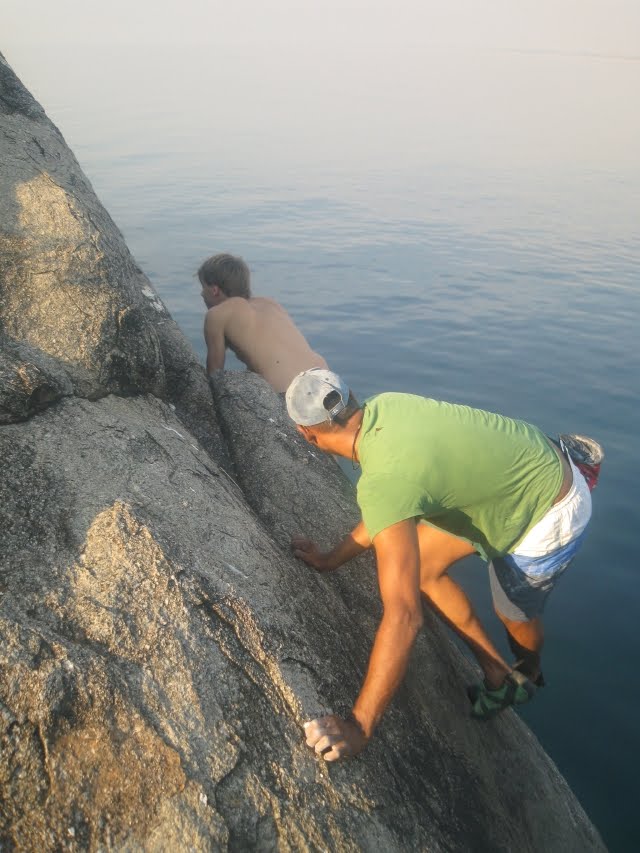
The next few paragraphs would really have sounded like a déjà-vu of a previous blog (Africa a la VSO), were it not for the fact that this time round, it was my mates and myself organising it! What a completely different experience that makes it all of a sudden. All these fun things, for example, that I took for granted in March, now revealed the hard work that went into them. All in all, it is still fun but a different kind of fun- one with greater longevity. But then also one with a steeper anticlimax- state that I’m in right now. Just to clarify things a bit, I got myself (expectedly for most of you who know me) into a rep seat for the volunteers at the last conference. Since then, I’ve been keeping quite busy outside work really sorting things out between VSO and the volunteers. The culmination of this role really, as I already anticipated, came with the organisation of the national conference. True, I won’t take the biggest credit for it. That, by far, should go to my hardworking city-based mates- Hazel, Ruth and Misja. Of course nothing goes plain sailingly in these matters, as a mere 3weeks before the scheduled date, we got a email from the central office telling us we might have to pull the plug on the whole thing. How do you react to such a shocker after you’ve spent the last two months chasing quotes around like a headless chicken and squeezing business discussions into every social gathering where there was a slightest chance of meeting another rep? But we persevered and made amendments to the programme to allow it to go ahead. The end result, with hindsight, at least in my opinion, couldn’t have worked out better. We had the assistance of a super-motivated team from the programme office, including our interim country director, Anne Wuijits. We included talks and presentations ranging from social volunteer-to-volunteer booster sessions to proper development-centred discussions. I even got to do a talk on environmental issues relevant to volunteers based in Africa. This was in-keeping with the new global strategy for VSO, which our revised agenda had to reflect. Beside all this business talk going on all day, we also got treated to some pretty top-act quiz, as orchestrated by our own Bwana Joel (bwana= chief!). And just to put the cherry on the cake, I even found two spots where to rock-climb in the early mornings (without hangover by the way!). The first one was this brilliant quarry with the longest sweetest traverse I’ve tackled in ages. It got so hot in there though that by 8am it was already too scorching to even breathe. That’s why the second spot had the effect of an El Dorado. It was actually just that in every way. Quaint little volcanic island about 2Km from the shore, which you got to by way of a pedalo (and back from using your own propeller power, if you’re called Ashtin or Klaas!), littered with ascents and traverses of all grades. My overexcitement is manifested, even now, by the deep scratches on all but 4 on my finger pulps from the severe friction with this voracious rock. I was being quietly deceived by a placid looking water with cyclet fish circling around in a bliss-like state.
Facilitating


Taking the plunge!
Rock is back...

The second major difference between this conference and the last lay in the fact that this time round, the end of the conference coincided with the start of another- the peer support. Klaas and I were the main organisers for this one and it took one great big bead of sweat off both our foreheads to keep things flowing as they did. I will probably look back at it as one of my medical achievements while here in Malawi. The peer support is really the main forum for doctors to pick each other’s brains about issues being faced at work and make a collective effort at troubleshooting them. A great opportunity to commiserate above all, but which this year we decided also to transform into something more than a rant- a set of recommendations. Thus we sat down and dissected each of our grievances in turn, trying to look for possible reasons to explain things and then formulating practical suggestions as to who should be made to address them and how. We are eventually going to make this into a consultation document, which hopefully will inform wider medical forums and ultimately land on a government desk sometime... Another greatly welcome innovation at the peer support was a number of joint sessions with the nurse and laboratory VSO groups. This was really an opportunity to explore new ways of working together and making a greater impact in our work. It’s difficult to make such serious work related sessions sound as glamorous as, say, a Lake of Stars festival, but, in our own modest way, we did also manage to throw in some good quality entertainment. This was largely aided by Klaas’s very own natural talent for turning seemingly irrelevant details into an all absorbing canvas of fascinating facts, as evidenced by his medical quiz and an incredible take on the intricacies of the Chichewa language! And this time, he didn’t even have his guitar at hand!

The music of my latest week of organising-meet-fun-meet-delirious-satisfaction will ring for a while to come in my own mind though. Once the anticlimax is over that is!